MISSION
The Charles River Conservancy works to amplify community voice and catalyze bold solutions, to make the Lower Charles River and its parks more vibrant, healthy, and welcoming now and in the future.
We CONNECT organizations, people and communities to each other and the river and its parks.
We CREATE bold, impactful solutions that elevate and strengthen the river and its parks as an essential ecological foundation and cultural asset for Greater Boston.
We CELEBRATE the river and its parks and the intersection of people and nature to inspire involvement.
ANNOUNCEMENTS
CRC BOARD:
The CRC is actively expanding our board of directors. Learn about the leadership opportunity here.
READ OUR 2025 ANNUAL REPORT:
With the help of our supporters, we had a great year increasing volunteer engagement, investing in unique ecological programs, and centering our work on the communities around the Charles. Check out our FY25 Annual Report to learn more.
E-NEWS:
Our May 2026 News Stream is out! Read about the latest happenings at CRC. Browse recent issues and sign up for upcoming e-newsletters.
ACKNOWLEDGEMENT:
Our work is carried out across traditional territory of the Massachusett, Nipmuc, and Wampanoag Nations, and homelands of the Pawtucket peoples. Read our history page for a detailed acknowledgement and resources to learn more about Indigenous territorial history and existing Native-run groups
IN SOLIDARITY:
Our work depends on equity, and we therefore cannot stay silent to racism and police brutality. Read our statement of solidarity with Black Lives Matter protestors in Boston and around the country.
Lead photo by Ceijay Photography
Sign up to Swim at City Splash!
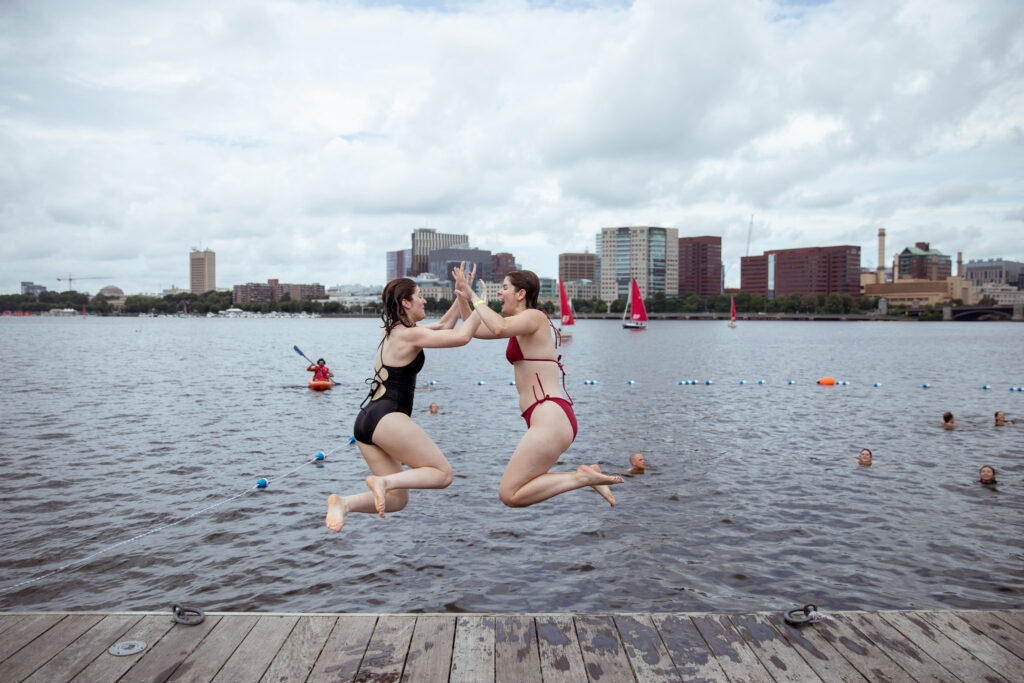
Celebrate the joy of a swimmable Charles River at City Splash on Saturday, July 18, 2026 on the Esplanade, the only sanctioned recreational public swim in the Charles. Swimmer registration is now open! If swimmer registration is currently at capacity, please check back often as swim spots may open up.
Interested in supporting our signature swim event as a valued sponsor? Learn more about City Splash sponsorship opportunities.
Meet Victoria & Ananda, Your 2026 Graffiti/Street Artists-in-Residence
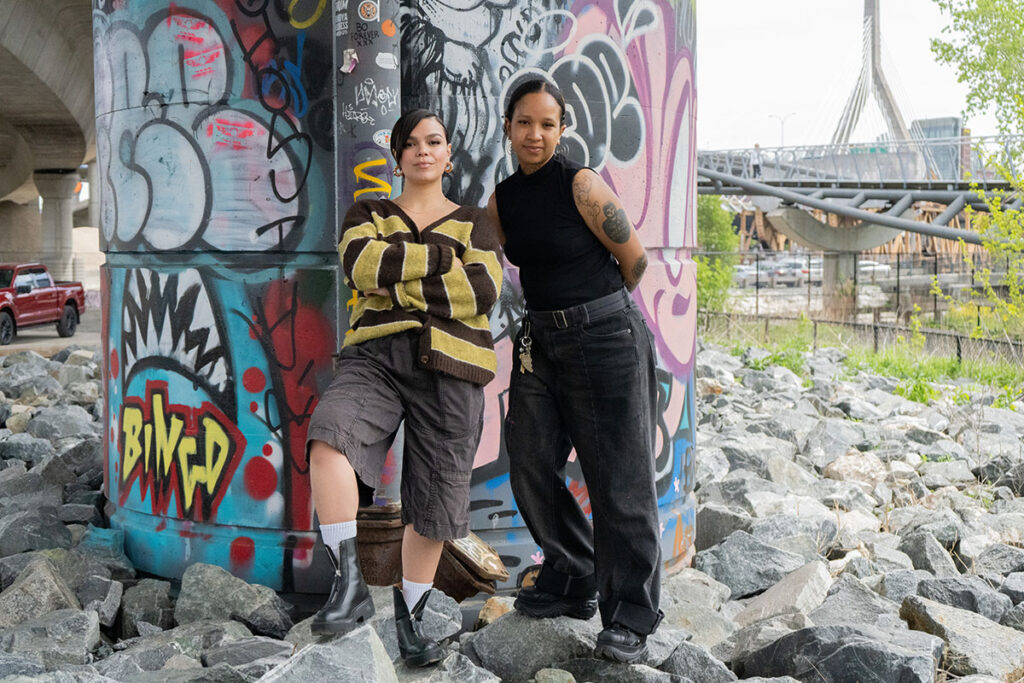
We’re excited to introduce our 2026 Graffiti/Street Artists-in-Residence at Lynch Family Skatepark: Boston-based visual artists Victoria DelValle and Ananda Toulon!
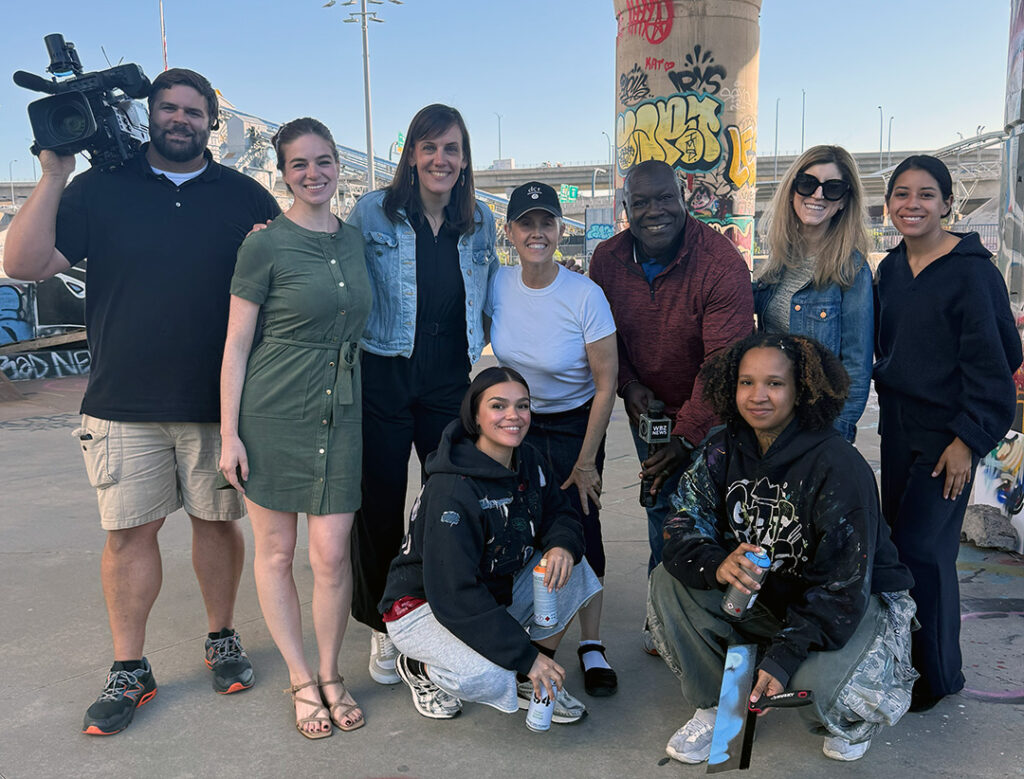
Visit our public art press mentions to watch the artists paint LIVE on CBS Boston with CRC and DCR. We had a lot of fun with WBZ-TV’s Levan Reid and crew at the skatepark (starting at 4:45am!).
Cambridge’s Riverbend Park is Now Open!
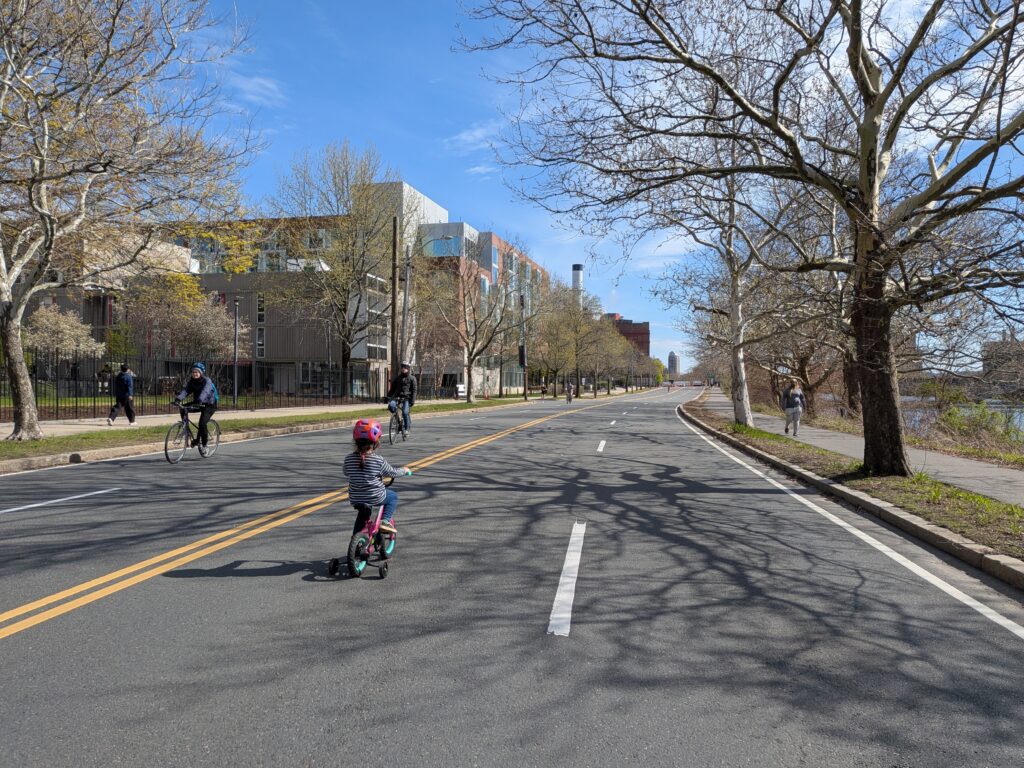
It’s that time of year again! From the last Sunday of April through the second Sunday of November, a stretch of Memorial Drive in Cambridge is closed to vehicular traffic from 11am to 7pm, creating a large stretch of open space alongside the parklands to accommodate cycling, skating, running, and a range of other activities.
Due to ongoing construction associated with the Memorial Drive Greenway Improvements, Phase III project, Riverbend Park will be temporarily modified throughout the 2026 season. Learn more.
Season Opener: The Floating Wetland Returns!
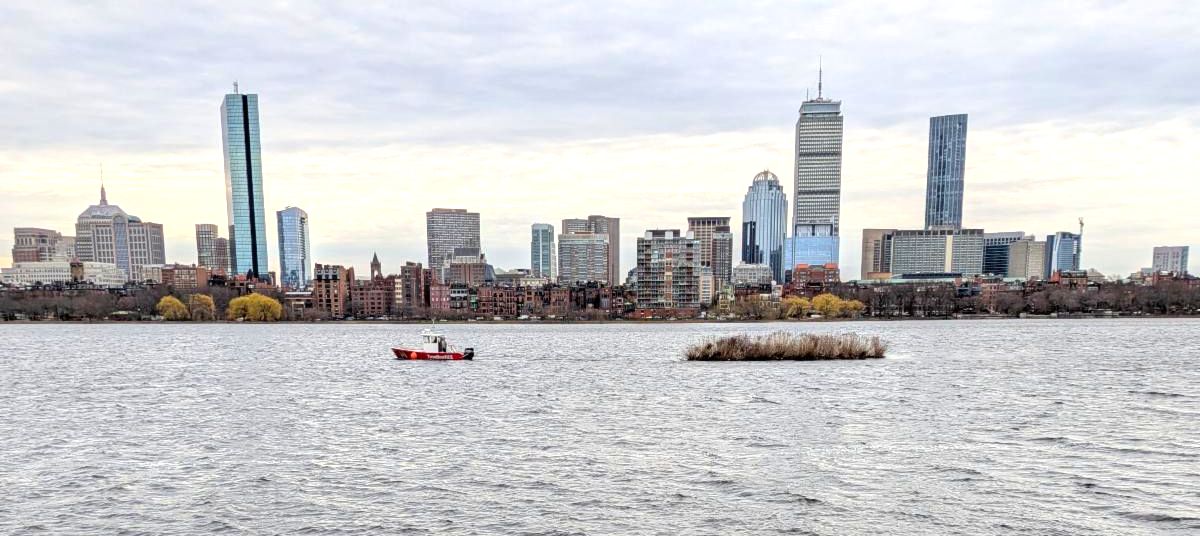
Moving day success! On March 30, 2026, the Charles River Floating Wetland made its annual Spring journey from its winter berth at the MIT Sailing Pavilion back home for its 7th season (moseying downstream along a towpath that runs under the Longfellow “Salt and Pepper” Bridge). Come say hi to “FWed” and its usual spot near Broad Canal. Visit often to see its raft of native plants change colors and textures throughout the season, mirroring the change in trees and shrubs along the riverbanks. Island buds and blooms are soon to come, and you don’t want to miss them!
Don’t miss DCR’s social video spotlight on the Floating Wetland!
MWRA’s CSO Control Plan Still Releases Sewage in the Charles River During Heavy Storms: Public Comment Period Now Open
Get the full story on the Updated CSO Control Plan and learn how to take action on our Advocacy page.
Need a TL;DR on how the CSO plan is being presented and what’s at stake? Join Charles River Watershed Association (CRWA) and Mystic River Watershed Association (MyRWA) for Ending CSOs: The Time Is Now!, a webinar on the new draft Combined Sewer Overflow (CSO) long-term control plan. This webinar will summarize the plan and describe ways it can be much stronger at reducing sewage discharges, at minimal cost to ratepayers. There is one upcoming webinar on Thursday June 25 (12pm) over Zoom.
Public comments on the Draft Plan can be submitted to the project team through an online comment portal, by email (UpdatedCSOControlPlan@aecom.com), or by mail through September 30, 2026.
Project office hours: The MWRA’s CSO Control Plan project team announced a series of upcoming virtual and in-person office hours from June through September. Note: While participation in office hours does not constitute a public comment, there will be laptop stations set up for anyone wishing to submit a public comment during in-person office hours.
Worth reading: The Boston Globe (May 12, 2026) publishes “New plan would dump sewage into the Charles River for decades to come“.
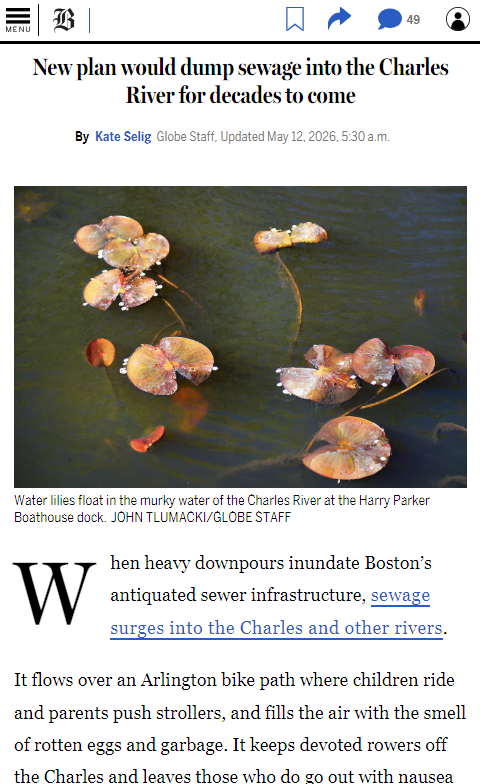
The sewage is not just a problem for Boston-area residents. These outflows take place in more than 100 locations across the state, disproportionately impacting lower-income communities. In Lowell and Springfield, more than 400 million gallons of this toxic mixture are discharged into rivers every year on average, according to data compiled by the Massachusetts Rivers Alliance, a nonprofit conservation organization. “Combined sewer overflows are a statewide challenge, from the Pioneer Valley to Buzzards Bay,” said David McGlinchey, the alliance’s executive director.

Floating wetlands made the FRONT PAGE of the @bostonglobe print edition earlier this week, Monday June 8, 2026! Find a copy at your local library (or read the article online) to see how this innovative example of nature-based green infrastructure is making waves in urban waterways, including the Charles River (with CRC Executive Director Laura Jasinski) and the Fort Point Channel (@savetheharbor x @biomatrixwatersolutions).
The new Fort Point Floating Wetland was planted with over 1600 native salt-tolerant plants spanning 15 species, including several varieties of cord grass (Spartina), sea lavender (Limonium vulgare) and coastal goldenrod (Solidago sempervirens).
Below the waterline, a number of sculptural reef habitats (Biomatrix Shelter Shells) hang from the access pier, recreating complex habitat texture by providing nooks and crannies to shelter marine invertebrates and small fish.
Discover the Charles River floating wetland near the Longfellow Bridge or up close with a kayak from @paddleboston Kendall Square!
Read all about floating wetlands by visiting our website (link in bio)!
#floatingwetlands #naturebasedsollutions #greenerboston #charlesriver
Jun 12


As part of its commitment to ensuring residents and visitors of all abilities can connect with nature through outdoor recreation, the Massachusetts Department of Conservation and Recreation (@massdcr) announced their summer programming schedule for its Universal Access Program (UAP).
UAP provides adaptive and accessible recreation opportunities at MassDCR parks throughout the year, helping make Massachusetts’ park system more welcoming and inclusive for all. This summer’s programming includes hiking, boating, swimming, cycling, and golfing at DCR properties located throughout the state.
From June through August, free and low-cost adaptive programming will be offered at 29 DCR properties. Each activity is designed to accommodate a wide range of needs and includes adaptive equipment and support. Programs are open to individuals of all ages and abilities. Friends and family of participants are also encouraged to participate.
Learn more about MassDCR UAP Summer Programming by visiting their website (link in our bio).
📷: @massdcr
#parkaccess #stateparks #massdcr #accessibility
Jun 10

Join the @charlesriverwatershed (CRWA) and @mystic.river.watershed (MyRWA) for a webinar on the new draft Combined Sewer Overflow (CSO) long-term control plan on June 9th and June 25th. The plan put forward by the Massachusetts Water Resources Authority (MWRA) and the Cities of Cambridge (@cambridgemass) and Somerville (@somervillecity) calls for improvements but does not eliminate CSOs.
A combined sewer overflow (CSO) occurs when a large rainstorm overwhelms a combined sewer system, causing stormwater to mix with wastewater (or sewage) and discharge to a nearby waterway (like the Charles and Mystic Rivers). These CSOs (and the sheer volume of poop they dump in the river after heavy storms) negatively affect water quality and public health, and limit the ability to make progress towards a swimmable, fishable Charles River.
This CRWA & MyRWA webinar will summarize the plan and describe ways they believe it can be much stronger at reducing sewage discharges, at minimal cost to ratepayers. Find registration links and more information and updates on our CSO Control Plan advocacy page (see link in our bio).
📷: @charlesriverwatershed
#keepthecharlesclean #charlesriver #environmentalprotection #cutthecrap #csos
Jun 8

Happy World Environment Day from the CRC! It is important to take days like today and reflect on the beautiful @massdcr parks, natural landscapes, and resources we have here in Massachusetts. Today is a day for encouraging worldwide awareness and action to protect the environment, a mission that the CRC has held close since its founding. Join us in celebrating our planet, not just today, but everyday! 🌎🌳 How will you celebrate the environment today?
📸: @bandj_photography
#worldenvironmentday #charlesriver #massparks #noplanetb
Jun 5

Get ready for the biggest event of the Summer: City Splash 2026!! City Splash is a community event that provides the public the rare opportunity to swim in the Charles River and raise awareness to bring river swimming back to Boston! This annual state-sanctioned swim, hosted by the Charles River Conservancy, allows the public to experience the joy of swimming in the Charles River—one of the cleanest urban rivers in the United States! This year’s City Splash will be held on Saturday July 18th, so save the date to not miss out on your chance to swim!
Eager to splash with us? Subscribe to our e-news (link in bio) to be notified when swim registration goes live. Available swimming slots are capped to ensure a safe and fun event, and the demand to swim the Charles is HIGH and spots go FAST!
Although all who swim must be pre-registered and be at least 18 years old, on-land activities on the @esplanadeinboston are free, all-ages, and open to the public throughout the event.
Swimming in the Charles River is only allowed if a permit is obtained from the Massachusetts Department of Conservation and Recreation (@massdcr) and we work in partnership with DCR to obtain a Special Use Permit for this unique event. The CRC has a vision for a swimmable river, but does not encourage swimming in the Charles outside of permitted events.
📸: @alukphoto
#swimthecharles #charlesriver #citysplash2026 #publicswim #swimmablecities #riverswimming #summervibes
Jun 4

In May, our stewardship team made major progress on a long-awaited native planting project at Hell’s Half Acre. In partnership with community volunteers, the Cambridge Plant & Garden Club (@thebostoncommittee), and CRC staff, the team prepared and restored multiple planting zones. Including the roadside and wetland areas.
The project included pre-installation work such as vegetation clearing, site preparation, and mesh fencing to help protect new plantings. On planting day, volunteers split into three groups to tackle more than 700 square feet of restoration area across the site. Volunteers dug holes for planting locations before installing 77 native plants across 8 different species! Some of the plants include: solidago rugosa, Polygonatum biflorum, Dennstaedtia punctilobula, Diervilla lonicera, and Eurybia divaricata.
From in-house prep work, to day-of volunteer planting crews, to season-long vegetation monitoring by our dedicated volunteer Charles River Environmental Watch (CREW) members, this effort represents another step toward restoring resilient native habitat along the riverfront. If you are interested in volunteering with the CRC, check out the link in bio and sign up today!
📸: Aaron John Bourque
#planting #massparks #nativeplants #charlesriver #restoration #biodiversity
Jun 1

The Charles River Conservancy regrets to share that we have made the difficult decision to cancel the Skatepark Event, “Double Take, Skate Paint Imaginate”, this Saturday. The event is cancelled due to the Massachusetts wind advisory in effect this Saturday. The advisory notes unsafe conditions for engagement in outdoor locations.
Everyone at the CRC wants to express our thanks to all of you who have shown up for the Lynch Family Skatepark Graffiti/Street Art Artist in Residence Program. From sharing our posts, to spreading the word, or cheering on members of the skatepark, it is an amazing display of community. We are excited to continue working with our 2026 Artists-in-Residence, Victoria (@thirteenvicarchive) and Ananda (@anandatoulon), on more events this Summer!
Thank you for your understanding!
May 29

Join us at Lynch Family Skatepark THIS Saturday, May 30 from 12–4 PM for “Double Take: Skate, Paint, Imaginate,” a free, all-ages celebration of skate culture, live art, music, and community.
Meet your 2026 Graffiti/Street Artists-in-Residence Victoria DelValle (@thirteenvicarchive) and Ananda Toulon (@anandatoulon), experience live painting in action, skate, connect, or simply come hang and enjoy the energy of the park. Coordinated alongside @childish.rayvino, the afternoon will feature live music from @lanz.la, @itsmizeyesis, @djlenore, and sound by @systemfailure617. Enjoy complimentary treats from @znzslushies_ and explore local vendors including @bruisedboutique, @scopeapparel, and @guerrilla.mag.
This residency marks the formal debut of Boston-based visual artists Victoria DelValle and Ananda Toulon’s collaborative practice as a duo. Together, they blend visual storytelling, spray-paint fluency, and community-centered artmaking to create work that evolves through dialogue, movement, and participation. Throughout the summer, their visual language of saturated color and surreal symbolism will transform the concrete pillars of Lynch Skatepark into a living canvas shaped by the rhythm and creativity of the space.
So mark your calendars and join us THIS Saturday to celebrate the 2026 artists, skate culture, and our incredible @massdcr parks (especially Lynch!).
See you at the skatepark!! Bring your wheels and spray paint sets for the free walls!
📷: @childish.rayvino
#bostonskate #streetart #graffiti #publicart #freewalls #cambridgefreeevents
May 28

Earlier this month, Taylor Leonard (CRC Program Manager, Community Partnerships) joined EnRoot (@enrootedu) at their inaugural Career Skills Showcase at the Massachusetts Institute of Technology (MIT) Welcome Center! EnRoot is a Cambridge-based educational organization that empowers immigrant youth to achieve academic, career, and personal success through inspiring out-of-school experiences.
Local professionals like Taylor shared their skills, experiences, and opportunities that shaped their careers. Students participated in workshops that helped build their networking and communication skills to confidently explore future careers and the professional world.
Do you know of any cool green jobs, opportunities, or resources geared towards youth and early-career professionals? Share them in the comments!
#careerskills #cambridge #greenjobs #environmentaleducation
May 26

Did you happen to catch some of the tree-mendous tree work on Greenough Boulevard this past week? The CRC partners with the Massachusetts Department of Conservation and Recreation (@massdcr) to steward and improve the parklands of the Charles River Reservation, including by collaborating on targeted tree care. Young “street trees” in Boston and Cambridge frequently struggle with typical urban stressors like soil compaction, drought, pollution, and mechanical damage, with many failing to make it to maturity. As a result, they are unable to provide their full ecological and aesthetic benefits including shade, pollution mitigation, and visual interest.
In 2025, the CRC and DCR identified 25 young trees along Memorial Drive in @cambridgemass showing clear signs of stress-induced poor health. Barrett Tree Service East (@barretttreeserviceeast) was contracted for air-spading to address extreme soil compaction, followed by application of biochar and mulch to improve soil nutrient quality and moisture retention.
Following the success of this project, the CRC and DCR again engaged Barrett in 2026 to complete additional work along Greenough Boulevard, between the Eliot Bridge and Grove Street. This year, 29 young trees between the Dr. Paul Dudley White Bike Path and the roadway were identified as needing air-spading and soil improvements, as well as minor structural pruning to improve canopy structure and long-term stability. A further 28 trees between the bike path and the river were identified for more extensive pruning to eliminate conflicts with utility wires and ensure adequate headroom for path users. We thank Barrett Tree Service East and DCR for being such incredible partners for this critical work.
#treecare #cambridge #environmentalcare #charlesriver
May 22

Last week, the CRC hosted our “Global Lessons, Local Waters” Floating Wetlands Panel at the @barrfdn. We were joined by speakers from the Wild Mile (@urbanrivers), the National Aquarium (@nationalaquarium), Biomatrix Water (@biomatrixwatersolutions), and @northeastern alum Max Rome (Green Infrastructure @cityofboston). Together, the panel explored the importance of nature-based environmental solutions and sparked engaging conversations about how environmental stewards can help restore waterways, educate the public, and create healthier habitats for wildlife.
The evening provided an opportunity for attendees interested in building their own floating wetlands to learn directly from organizations leading innovative projects across the country. @savetheharbor Executive Director Chris Mancini spoke about the importance of collaboration between organizations by sharing research, resources, and lessons learned to strengthen collective environmental impact. Following the launch of the Charles River Floating Wetland, organizations like @savetheharbor have been able to begin pilot wetland projects of their own, including a newly installed floating wetland in Fort Point Channel built using Biomatrix floating ecosystem modules and planted just last week.
Charmaine Dahlenburg, Director of Field Conservation at the National Aquarium, shared that It feels so good to have so many people interested in wetlands now, because just a few years ago it felt like it was only her. This unity and collective interest is so important, and we must continue to grow our network and build off of each other`s work to continue to make positive changes in our local waterways!
Thank you to everyone who joined us last Tuesday, asked thoughtful questions, and contributed to such an inspiring conversation on the future of our waterways and urban ecosystems.
#floatingwetland #waterways #charlesriver #baltimoreaquarium #thewildmile #biomatrix
May 20

This summer, @childish.rayvino will be collaborating with the CRC team as Talent Booker and Events Co-Coordinator for programming and events at Lynch Family Skatepark. Known for their dynamic mixes, thoughtful curation, and deep connections within Greater Boston’s creative scene, Rayven Heath brings a strong passion for community, culture, and uplifting emerging voices. From May through September, they will help bring new talent, fresh energy, and diverse creative experiences to the park.
Born and raised in Dorchester, Rayven has built a name for themselves by spotlighting lesser-known and BIPOC artists while fostering meaningful connections through music, performance, and collaboration. Rayven uses music as a platform to unite people and amplify diverse voices. As Summer Talent Booker and Events Co-Coordinator, they aim to create community-driven experiences that blend music, art, and culture while embracing the raw energy and individuality of skate and grunge culture.
They can`t wait to see you on May 30th for our Artists-in-Residence Launch party! Interested in taking part in more of these summer experiences? Stay tuned for more details and information for our June, August, and September events! Also, check out @childish.rayvino on soundcloud and instagram using their link in bio!
Photo Credits:
@yvesworld.co @blkformat @filmedbygutta
May 18
